Chimney Repairs For Your Pimlico Property
Alliance Roofing London provides chimney repairs in Pimlico. Tell us whether the work is at a house, a flat, a managed building or commercial premises. The roof covering, access and the symptoms you have noticed will help us prepare for a useful first conversation.
For Pimlico enquiries, call our London team on 020 8528 3900. Our London office address is 28 Old Brompton Road, South Kensington SW7 3SS. If the issue is urgent, the emergency contact number is 07553 337796. Attendance is arranged around the location, weather and safe access; a contact line is not a promise of a fixed arrival time.
Repairing The Whole Chimney Detail
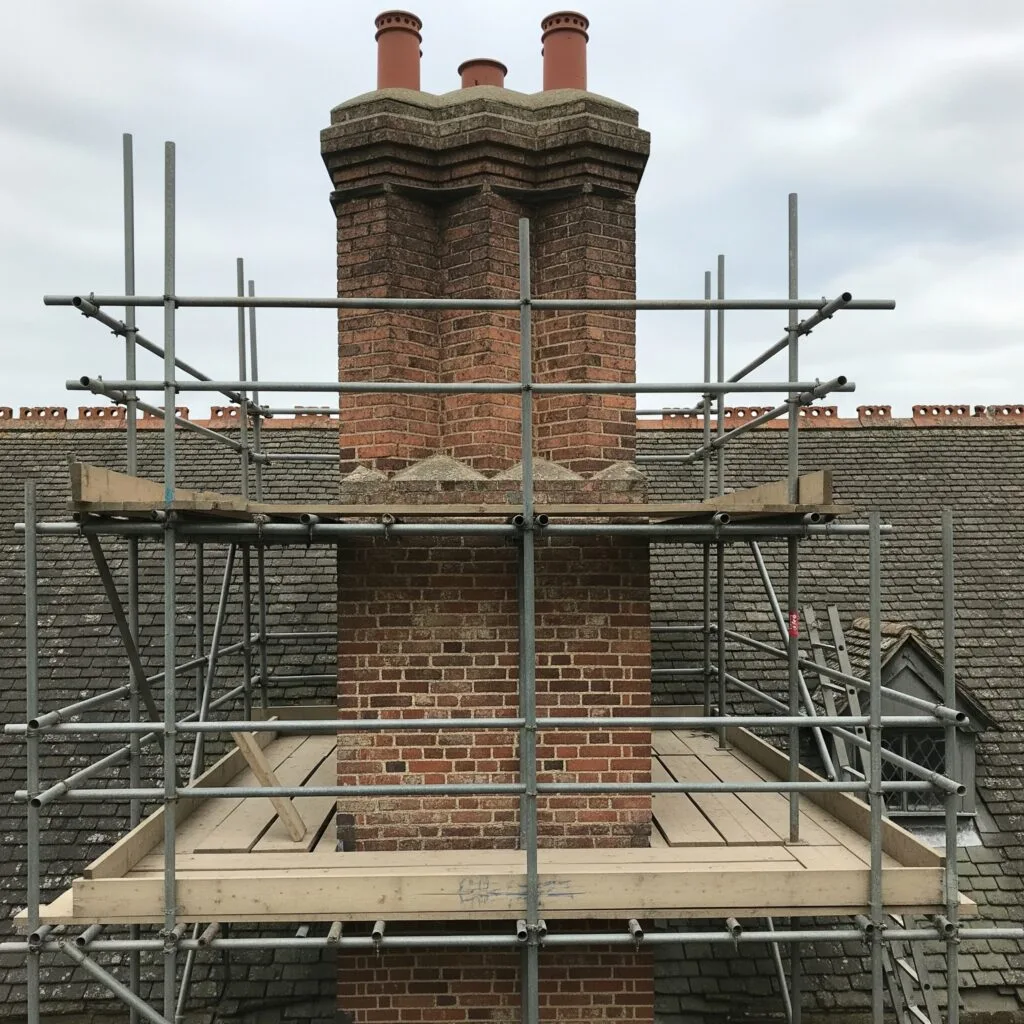
A chimney is exposed to wind and rain on every side, and it sits where several roof details meet. A leak near a chimney may come from open pointing, a cracked pot, loose flaunching, failed leadwork, a back gutter or the roof covering below the stack. A useful repair begins by looking at the masonry and the surrounding roof together, rather than treating the first damp mark as the complete diagnosis.
Alliance Roofing London can assess chimney stacks on period homes, terraces, flats and other properties where the chimney remains part of the roof envelope. The scope may be small, such as replacing a damaged pot or renewing a short section of flashing, or it may involve repointing, rebuilding a defective section and weathering the junction properly. The work is planned around the condition that is actually visible and any further defect found when the area is safely opened up.
What A Chimney Assessment Covers
The inspection should cover the brick or rendered stack, mortar joints, chimney pots, cowls, flaunching at the top, lead aprons, step flashings, soakers and any back gutter behind the stack. It should also look inside where there are signs of damp, staining or a disused flue. Water can travel along masonry or roof timbers before it appears, so the position of an internal mark is useful evidence but not always the entry point.
Older London properties may have weathered bricks, altered flues or previous repairs using hard mortar and surface sealants. These details affect the sensible repair. Repointing may help where joints are open, but it will not cure a failed lead detail. Likewise, new flashing will not repair a loose stack or saturated masonry. A written scope should separate masonry repairs, roof junction repairs and any work to pots or cowls.
Masonry, Flaunching And Leadwork
Repointing is carried out where mortar joints have weathered and no longer shed water properly. Damaged bricks may need local replacement, while a larger crack or movement may require a more detailed structural assessment before work proceeds. Flaunching supports chimney pots and keeps the top of the stack weather resistant. Cracked or loose flaunching can allow water into the masonry and should not be hidden under a cosmetic coating.
Lead flashings need to be formed around the stack and connected to the roof covering so water is directed away from the joint. The right arrangement may include an apron at the front, stepped flashing at the sides, soakers beneath slates or tiles and a back gutter behind the stack. Cowls and caps can help protect unused flues from rain, but the correct fitting depends on the flue and the way the chimney is used.
A Clear Repair And Handover
Before booking, it helps to share the postcode, the roof type, where water appears and whether the chimney is used. Safe photographs from the ground, a window or the loft can show the stack and the internal symptom without putting anyone on a wet roof. Access may involve a ladder, scaffold or another safe method, especially for tall terraces and shared buildings.
The completed work should leave the customer clear about what was repaired, what was retained and whether any maintenance remains. Useful handover information can include photographs of the stack and flashings, notes about pots or cowls and advice on watching a repaired area during heavy rain. That makes it easier to identify a genuine new issue rather than assuming every damp mark has the same cause.
Planning Access And Protecting Your Property
A roof cannot be assessed properly from a price list. Its height, shape, covering and access all affect the work. A rear extension reached through the house needs a different plan from a front slope beside a public pavement. Tell us about narrow side passages, shared gardens, basement lightwells, parked vehicles and any part of the property that must remain in use. These details help establish how materials and removed roofing can be handled without creating an avoidable obstruction.
Where scaffolding or another access arrangement is needed, that should be identified in the scope before the work is booked. For a flat, leasehold property or shared roof, the person commissioning the work may need to involve the freeholder, managing agent or neighbouring owner. Please tell us who can approve the works and provide access. We can then discuss the roof with the right person and avoid agreeing work on an area that is outside your responsibility.
What Your Roofing Quote Should Cover
The visible surface is only part of a roofing job. A useful quotation describes the affected roof section, the preparation, the proposed materials and the treatment of adjoining details. Access, removal of old materials and waste handling should be clear. Where damaged timber or a wet deck may be concealed, the quote should explain what can be assessed beforehand and how additional findings will be discussed. You should not have to infer what is included from a single line and a total price.
Compare the proposed work as well as the figure. One quote may cover a small repair while another includes renewal of the surrounding covering or drainage details. Ask why each option is being recommended and what will remain untouched. A larger project may also require decisions about insulation, ventilation, rooflights or the finished roof height. Those decisions belong in the planning conversation, before materials are ordered or a roof is opened.
From The First Visit To The Final Check
Alliance Roofing London keeps its roofing work in-house. The owner oversees projects and the final sign-off, giving you a point of accountability for the agreed work. Before starting, we discuss access, the area being repaired or replaced and the arrangements for keeping the property protected. If opening up the roof reveals a condition that changes the scope, the finding needs to be explained before a different course of work is agreed.
At completion, the useful question is not simply whether the roof looks new. The repaired junctions, drainage routes and any adjoining surfaces should be checked, and removed materials should be cleared from the working area. Ask what has been repaired, what has been retained and whether any separate maintenance remains. Keep the written scope and any photographs together, especially if you are looking after a rented property or coordinating work for other owners.
Looking After The Roof Afterwards
Keep an eye on the roof from ground level after strong winds or sustained rain. A new damp patch, overflowing gutter or displaced piece of covering is worth reporting before the next wet spell. Do not climb onto the roof to investigate, and do not assume a flat roof or rooflight can take your weight. Photographs from a safe window or the garden often provide enough information for an initial discussion.
Regular checks should suit the roof rather than follow a generic treatment package. Trees can increase the amount of debris reaching gutters and outlets, while a roof terrace needs its drainage kept clear beneath or around its walking surface. Tell us about previous repairs and keep notes on when a leak appears. That history can help separate a new fault from moisture that is still drying out after an earlier leak.