
START WITH THE WATER PATH
A damp mark on a ceiling does not always sit below the point where rain enters. Water can move along roof timbers, underlay, decking, masonry and insulation before it reaches a room. A useful roof leak repair therefore begins with the symptom, the roof covering and the details around it. The aim is to find the most likely route before choosing a patch, a replacement section or a wider renewal.
Alliance Roofing London handles roof repairs across London, Surrey and Berkshire, including pitched roofs, flat roofs, rooflights, valleys, chimneys and roof edges. Tell us whether the problem follows heavy rain, wind-driven rain, melting snow or no obvious weather event. The timing can help distinguish a covering defect from condensation, plumbing or a drainage issue.
COMMON SOURCES OF A ROOF LEAK
On a tiled or slated roof, water may enter through a cracked or displaced covering, a valley, a ridge, a verge, a rooflight, a chimney junction or damaged flashing. Mortar can fail, fixings can move and earlier repairs can leave an exposed edge. Matching the repair to the existing roof matters because a new piece must work with the surrounding laps, falls and weathering.
On a flat roof, the leak may involve a split membrane, an open lap, a failed upstand, a damaged outlet, ponding, a rooflight detail or movement in the deck. A visible blister is not automatically the full cause. The membrane, insulation, deck, edge trim and drainage route may all need to be considered before the repair method is agreed.
REPAIR OR TEMPORARY PROTECTION
Active water ingress should be reported promptly because continued moisture can affect ceilings, plaster, insulation, flooring, electrical fittings and stored items. Move belongings away from the affected area where it is safe to do so, place a container under a drip and photograph the internal mark. Do not climb onto a wet roof or attempt to cover a high roof from a ladder.
Where conditions or access prevent a permanent repair on the first visit, the immediate priority is to reduce risk and limit further water entry safely. Temporary protection is not the same as a finished repair. The follow-up scope should record what was protected, what still needs inspection and whether the surrounding roof must dry before permanent materials can be installed.
WHAT A CAREFUL LEAK ASSESSMENT COVERS
The inspection should follow the roof above and around the internal symptom. It may consider coverings, laps, valleys, ridges, hips, verges, flashings, rooflights, chimneys, outlets, gutters, parapets, roofline components and visible timbers. Loft evidence can help, but it should not be treated as proof that the nearest roof feature is the only source.
Access affects what can be confirmed. A front roof beside a pavement, a rear extension reached through a house, a shared roof or a commercial building may need scaffolding or another planned arrangement. Tell us about narrow passages, shared gardens, parked vehicles, tenants, alarms and working-hour limits before a visit. The scope should explain what was visible and what would need opening-up or improved access.
ROOF LEAK REPAIRS FOR FLAT ROOFS
Flat roof repairs need attention to falls, outlets and the way the membrane meets rooflights, pipes, walls and edges. EPDM rubber, GRP fibreglass, torch-on felt and liquid rubber are all represented in Alliance Roofing London’s approved service range, but no system should be selected from the leak symptom alone. The existing build-up, deck condition, movement, moisture and roof use must be assessed first.
A local repair may be sensible where the failure is isolated and the surrounding roof is stable. Repeated splits, trapped moisture, widespread ponding or a damaged deck can point towards a larger renewal. A clear quote should state whether it covers preparation, stripping, insulation, membrane work, trims, outlets, rooflights, waste and protection of the room below.
ROOF LEAK REPAIRS AROUND CHIMNEYS AND JUNCTIONS
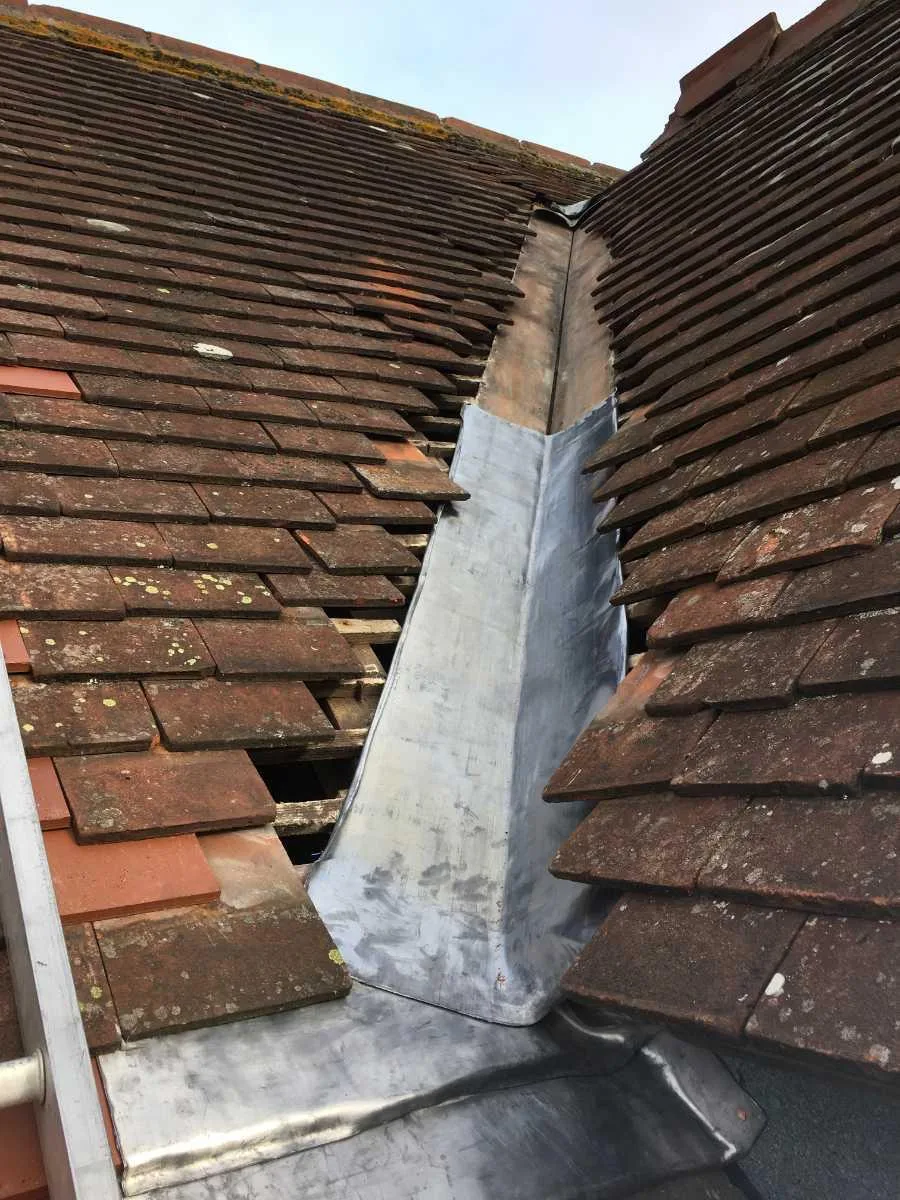
Chimneys, dormers, valleys and wall abutments concentrate weathering details in a small area. Lead flashings may need to be repaired or renewed, while the masonry, pointing, flaunching, pots and back gutter may also affect the water path. Sealant alone is not a substitute for a properly formed junction where the underlying detail has failed.
Photographs from a safe position can help show the stack, the roof slope and the internal mark. A repair should leave the owner clear about which detail was addressed and whether other parts of the roof remain for monitoring. If the leak continues, the history and the earlier repair record give the next assessment a more useful starting point.
WHAT YOUR QUOTE SHOULD EXPLAIN
A useful roof leak repair quotation describes the affected area, the likely cause, the proposed repair and the adjoining details that will be checked. It should separate confirmed work from provisional items that depend on what is found after coverings are lifted. Access, removal of damaged materials and waste handling should be visible in the scope rather than left for the customer to infer.
Alliance Roofing London keeps its roofing work in-house. The owner oversees projects and the final sign-off, so changes to the agreed work can be discussed with a responsible member of the team. The client record also confirms a 24/7 contact department and emergency roofing availability. Response timing still depends on location, conditions and safe access.
FROM REPAIR TO HANDOVER
After the repair, the surrounding junctions and drainage route should be checked where access allows. Removed materials should be cleared and the customer should be told what was repaired, what was retained and whether any drying or monitoring remains. Keep photographs and the written scope together, particularly if the property is rented, managed or shared.
Watch the area from inside and from ground level during later rainfall. A stain can remain visible while materials dry, but new water, a growing mark or a separate overflow should be reported. Do not walk on a flat roof or inspect a high roof yourself. Safe information from a window, loft or garden is enough for an initial conversation.
ARRANGE A ROOF LEAK ASSESSMENT
Send the property postcode, the location of the internal symptom, the date and weather when it appeared, the roof type if known and any history of repairs. Include safe photographs and explain access, occupancy and urgency. Call 020 8528 3900 or use the emergency contact route on 07553 337796 if the issue needs prompt attention.